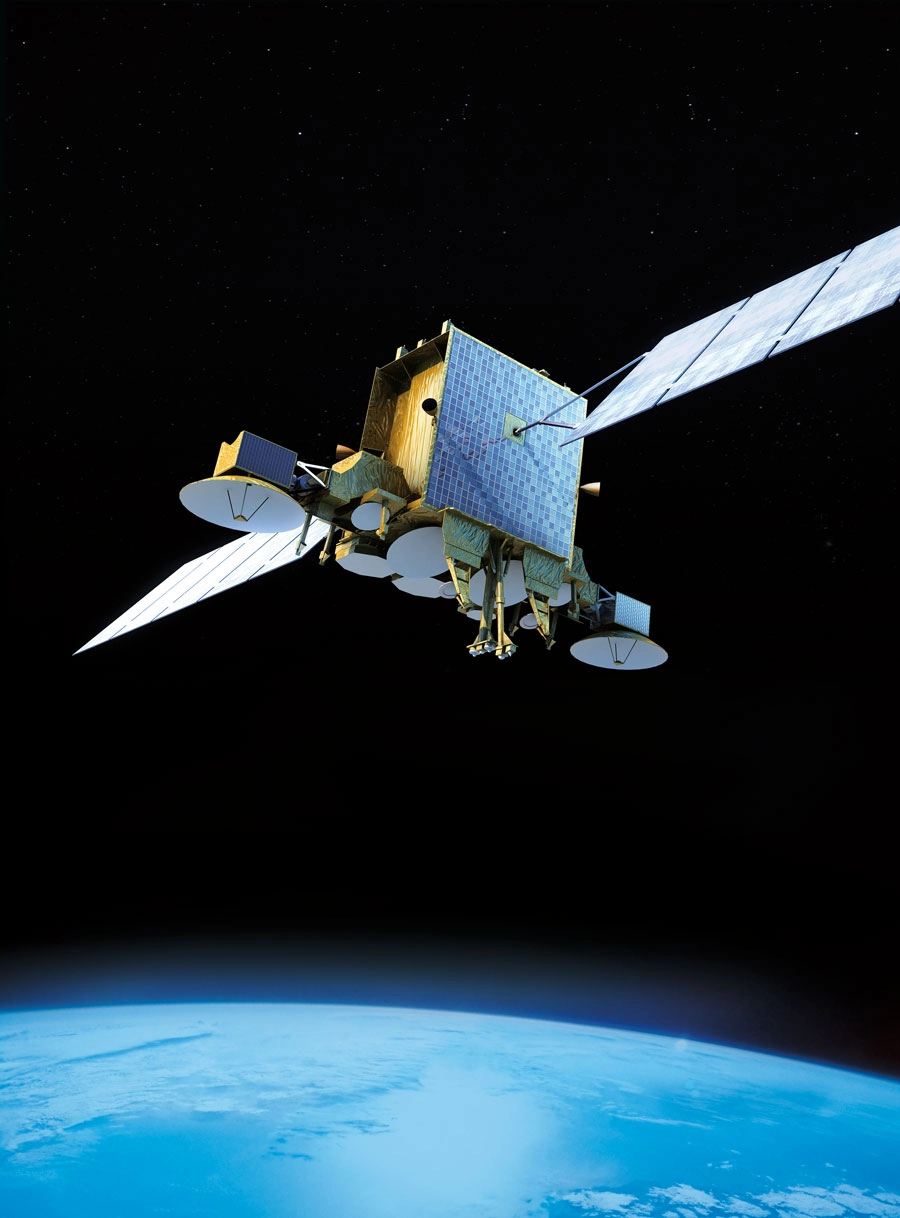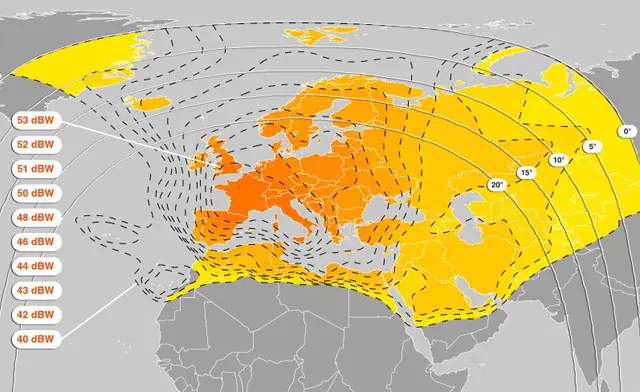
Hotbird is one of the most widely used communication satellites for broadcasting television and radio channels across Europe, the Middle East, and parts of North Africa.
Since its launch in 1995, the Hotbird satellite fleet has played a significant role in providing a wide variety of content, including free-to-air, subscription-based channels, and internet services.
With its strategic orbital position and advanced technology, Hotbird has established itself as a leader in the satellite broadcasting industry.
🚀 On the subject of Hotbird
Hotbird is operated by Eutelsat, one of the world’s leading satellite operators. The Hotbird satellite fleet consists of multiple satellites, such as Hotbird 13C, Hotbird 13B, and Hotbird 13E, which are positioned at 13° East longitude. This prime location allows Hotbird to provide coverage across large parts of Europe, the Middle East, and North Africa.
Hotbird offers an extensive array of services, including:
-
Television channels: A variety of television channels, including news, sports, entertainment, and educational programming.
-
Radio broadcasting: Both FM and satellite radio services.
-
Data and internet services: Reliable internet and communication links for businesses and individuals.
-
Corporate communications: Private communication channels for corporate and government use.
🌐 Hotbird’s Satellite Fleet
The Hotbird fleet includes several satellites positioned in the same orbital slot at 13° East, which gives it an exceptional ability to serve a large area of coverage.
Key satellites in the Hotbird fleet include:
-
Hotbird 13B
-
Hotbird 13C
-
Hotbird 13E
-
Hotbird 13F (Upcoming)
These satellites are equipped with high-powered transponders that deliver a wide range of services across the broadcast and telecommunication sectors.
🛰️ Frequencies and Services on Hotbird
Hotbird offers services across several frequency bands, including the Ku-band and Ka-band. These frequencies are used for different purposes:
-
Ku-band: The most common frequency for satellite television and radio services. It offers high-quality transmission with smaller dishes and supports high-definition (HD) channels and internet services.
-
Ka-band: Used for high-capacity data services and satellite internet, offering faster speeds and lower latency.
Hotbird’s wide range of frequencies enables users to access hundreds of television channels, radio stations, and internet services across a broad area.
📡 How to Receive Hotbird Signals
To receive signals from the Hotbird satellite, users need a satellite dish that is properly aligned to the 13° East orbital position. The dish should be connected to a compatible decoder, which will allow the user to tune in to the correct frequencies.
Common Hotbird Frequencies:
-
Hotbird 13C Frequency:
-
Frequency: 11.647 GHz (Horizontal)
-
Symbol Rate: 27500
-
FEC: 3/4
-
-
Hotbird 13B Frequency:
-
Frequency: 12.722 GHz (Vertical)
-
Symbol Rate: 27500
-
FEC: 3/4
-
These frequencies are used for a variety of services, including satellite television channels, radio stations, and data transmission.
For precise information on the frequencies and satellite settings, Sat Index is an excellent resource that provides updated details for users looking to tune their satellite systems to Hotbird’s services.
Hotbird is a major player in satellite broadcasting, offering wide-reaching coverage and reliable services across Europe, the Middle East, and North Africa. Its fleet of satellites provides a broad range of services, including television, radio, internet, and data transmission, making it a key player in the communication industry.
If you are looking to set up a satellite system to receive Hotbird signals or need the latest frequency updates, Sat Index offers the most comprehensive guides and settings for all your satellite needs.
Tips for Stable Reception of Scrambled Channels
- Use high-quality receivers compatible with encryption standards.
- Maintain proper dish alignment and LNB installation.
- Check smart card or subscription validity regularly.
- Use signal boosters if reception fluctuates due to distance or obstacles.
How to Point the Dish for Foreign Channels Easily
- Use satellite tracking apps or online calculators for accurate azimuth/elevation.
- Check local satellite footprints to ensure coverage in your area.
- Adjust the skew angle on LNBs for better signal reception.
- Use a signal meter to verify signal quality while adjusting.
How to Determine Satellite Direction Using Coordinates
- Use your geographic coordinates (latitude and longitude) to calculate dish alignment.
- Find the satellite orbital position and match it with your location.
- Adjust azimuth and elevation angles accordingly.
- Use mobile apps or satellite calculators for accurate positioning.
Protecting Equipment from Moisture and Rain
- Use waterproof covers for LNBs and external devices.
- Ensure all wire connections are tightly sealed against moisture.
- Install dishes in sheltered locations when possible.
- Prevent water accumulation around cables or devices.
- Use corrosion-resistant materials for outdoor installations.
How to Point the Dish for Foreign Channels Easily
- Use satellite tracking apps or online calculators for accurate azimuth/elevation.
- Check local satellite footprints to ensure coverage in your area.
- Adjust the skew angle on LNBs for better signal reception.
- Use a signal meter to verify signal quality while adjusting.
Best Global News Channels on Satellite
- Access international news networks like BBC World, CNN, and Al Jazeera.
- Verify the broadcast band (C-band or Ku-band) for your zone.
- Check channel frequencies and encryption status.
- Use a reliable decoder to maintain stable signal reception.